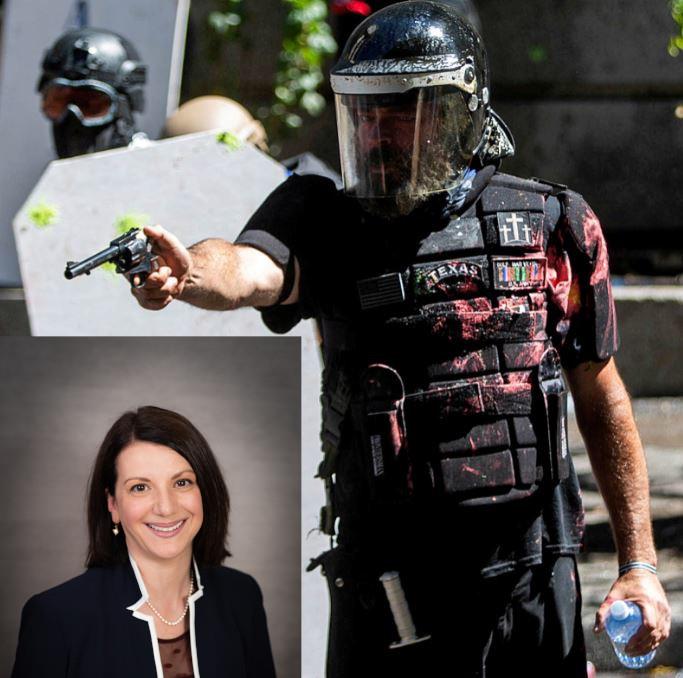
Judge Heidi Moawad sentenced Proud Boy Alan Swinney to 10 years in state prison for paintballing Antifa on two separate occasions and pulling a gun during one of those occasions. Swinney was convicted on a total of 11 counts, but only two them seem to matter because Judge Moawad was bound by Oregon's Measure 11 to impose mandatory minimums in both cases after failing to apply downward departures. She also determined correctly that there were two separate criminal episodes, but technically she was not required by law to impose consecutive sentences. Assault II Swinney was sentenced to the mandatory minimum of 70 months in state prison for shooting Jason Britton with a paintball on August 15, 2020. This conviction was made possible by the court improperly allowing the jury to consider whether or not a regular paintball is dangerous enough to legally be considered a dangerous weapon. A reasonable judge would have ruled that a regular paintball is not dangerous enough to qualify as a dangerous weapon for the purpose of distinguishing an Assault II from an Assault IV. The jury unfortunately bought the state's claim that a paintball is readily capable of causing serious bodily injury due to the rare likelihood that someone gets hit in the eye at close range which is what almost happened in this case. Britton was hit in the eyelid area and suffered a black eye. Britton also claimed to have suffered long term damage that continues to this day, but the state provided no medical documentation to back up his claims. To prove that Britton suffered the long term injuries the state would have had to introduce expert testimony ideally in the form of an eye doctor stating that he had evaluated Britton and diagnosed him with long term injuries, but they didn't do that, so the state had to proceed on the theory that a paintball is a dangerous weapon. However, the state argued that this was a case of transferred intent because Swinney intended to shoot someone else, but missed and shot Britton. That was necessary to establish the intent element necessary to convict someone of Assault II. However, the intended victim was wearing adequate eye protection, so if the intent were to be transferred then so too should have been the fact that Swinney intended to shoot someone with adequate eye protection making the likelihood of an eye injury to that person nearly impossible. A paintball cannot be considered a dangerous weapon if it is being used in a manner incapable of causing serious injury which was the intended case when Swinney pulled the trigger. How can the court transfer intent to use a paintball gun in a manner incapable of causing serious injury into intentionally assaulting someone with a weapon readily capable of causing serious physical injury? The intent to use a weapon readily capable of causing serious physical injury is missing in this case. Judge Moawad could have applied a downward departure capable of freeing Swinney from the mandatory minimum requirement of Measure 11, but chose not to largely due to Britton's unfounded claims of long term injury. The problem with those claims are that there has been no medical evidence presented to the court other than Britton's word. The fact that no expert testimony was presented at trial suggests that there is no evidence beyond Britton's word. Unfortunately, the burden of proof necessary to prove something in a criminal trial does not exist at a sentencing hearing. Anything, even hearsay, is allowed at a sentencing hearing and the judge can base her sentencing decisions on unproven accusations. In the video below Judge Moawad refuses to give Swinney the departure on the grounds that he caused "significant injury" to Britton's eye. Had it not been for this decision Swinney would have faced - months because of the sentencing guidelines. Unlawful Use of a Weapon (UUW) with a Firearm Alan Swinney was sentenced to 60 months consecutive for Unlawful Use of a Firearm under ORS 161.610 which states "The minimum terms of imprisonment for felonies having as an element the defendants use or threatened use of a firearm in the commission of the crime shall be as follows: (a) Except as provided in subsection (5) of this section, upon the first conviction for such felony, five years" (https://ift.tt/3ICp9eC). The felony Swinney committed with his firearm was Unlawful Use of a Firearm. That unlawful use being for the purpose of menacing Antifa. On August 22, 2020 Swinney pointed the gun at a crowd during a protest. He was convicted of menacing for that and the sentence will run concurrently with his sentence for unlawfully using a gun. Another problem with the system highlighted by this count is treating any UUW as if the weapon was used for its intended purpose. In this case using a firearm for an unlawful purpose other than shooting at someone carries a mandatory minimum sentence of 5 years regardless of the manner in which its used. It doesn't matter if you shoot someone or just threaten them either way you're using a gun for an illegal purpose and must be sentenced to at least 5 years. This type of statutory scheme has a disproportional impact on minor offenses involving firearms because most cases involving unlawful use of a firearm are covered by other statutes which carry longer mandatory minimums. For instance, had Swinney used his gun to rob a liquor store he would be charged with Robbery 1 for which he would be facing a mandatory minimum of 7 years 6 months (https://ift.tt/3DQyeNs). Adding a count of UUW to his charges would just result in him receiving a concurrent sentence, so it really wouldn't change the outcome. Likewise if he opened fire he would face far more time. At the same time it makes sense to make UUW a more serious charge than some offenses that can be committed with or without a weapon. In this case Swinney unlawfully used his gun to commit the misdemeanor offense of menacing which is defined as attempting "to place another person in fear of imminent serious physical injury" (https://ift.tt/3rUNW7U). A person can commit menacing simply by getting into someone's face and threatening to beat their ass, so it makes sense to make it a felony to use a weapon to commit the offense since the amount of fear experienced by the victim will be greater, but it does not make sense to impose a mandatory minimum just because the weapon in question is a gun. A person could commit menacing with a deadlier weapon like a bomb or grenade and get less time on the UUW than Swinney did just for not using a gun. Selective Prosecution and Activist "Victims" This case has a lot of red flags indicative of selective prosecution due to the high profile nature of Swinney's activism, the political leanings of District Attorney Mike Schmidt, the excessive nature of the charges, the excessive nature of the sentence, the history of the judge, and the fact that the "victims" in this case were activists using the court to push their agenda. In August of 2020, DA Schmidt announced an amnesty policy for people charged with specific crimes related to protests (https://ift.tt/3ixdUGr) and said that charges not on the list would be reviewed with heightened scrutiny. There were lots of incidents involving injuries more serious than Britton's which were inflicted with rocks, mace, paintballs, and other objects for which the perpetrators even when identified were never charged. It should not be hard for Swinney's legal team to find similarly situated persons not charged by the DA's office. The next step in a selective prosecution challenge would be to show that the difference between Swinney and the uncharged similarly situated people was Swinney's exercise of a constitutional right. Since Swinney has no prior criminal history it seems that the only difference between Swinney and countless uncharged similarly situated people was Swinney's far-right politics. If Swinney had shown up in black bloc and done the same things he probably would have never been charged even if the cops knew who he was. The biggest difference one could argue was Swinney brandishing a gun, but if you look at cases of injuries inflicted at some of the protests you'll find far more serious injuries, so in theory public safety needs would favor prosecuting those cases. It seems the biggest difference between Swinney and other similarly situated people was the high profile nature of his activism. Swinney went from city to city protesting and counter-protesting Antifa. According to the government he would bait Antifa into attacking him so that he would have an excuse to use force in self-defense, but that in this case he had no right to self defense. The video certainly shows that he had no right to self-defense in the case of Britton, but whether he had a right to self-defense when he pulled the pistol a week later is less clear. We were not at the rally, have seen limited amounts of video footage showing both sides attacking each other, and can't tell for sure if there is activity on the Antifa side that may have justified using a gun solely in a deterrent capacity. If Swinney could show that he had legitimate fear of a felony being committed against his person then he could have justified pulling the gun, but it seems more likely that he was showing off and using it to scare people that didn't need to be scared. The government took the position that Swinney is a very dangerous person that needs to be kept off the streets because they know he won't change at all. We are going to say for the sake of argument that they are right, but that his conduct was clearly not dangerous enough to justify keeping him off the streets for as long as possible. It seems the worst anyone has to worry about from Alan Swinney is a black eye and soiled panties. If anyone is in danger because of Swinney's activities it is Swinney himself. He would surely continue his efforts to provoke Antifa into giving him excuses to use physical force against him and leftists tend to have a really hard time controlling their emotions when offended. Other leftists recognize that and try to protect them by targeting the provocateur thinking that if they don't stop the provocateur somehow it is only a matter of time until an emotionally unstable lefty violently attacks him. If the likely target of such an attack is known to the government to have violent tendencies or has at least made statements indicating a propensity to engage in violence, in this part of the country the government often engages in what some legal scholars call a "heckler's veto" which involves taking action to silence a speaker to prevent a reacting party's anticipated negative behavior. A common example is the denial of permits to groups of demonstrators whose speech is anticipated to provoke a violent response from counter-protesters. A common tactic used to silence such people is selective prosecution for the purpose of seeking excessive sentences. Another goal of this prosecution was to deter other right wingers from following in Swinney's footsteps. Hearing that he got 10 years no matter what the circumstances will resonate throughout the country and make others think twice before setting foot in Oregon. This was perhaps the biggest and ultimately most irrelevant motivation prosecutors had. Prosecutors think that by persecuting Swinney they can prevent future violence by deterring those likely to provoke Antifa because if let loose Swinney would continue recruiting people to his cause. The bigger his group grows the more people they piss off the greater the likelihood there is of something going wrong. However, that is all technically skepticism that has no place in a court of law. The activist "victims" in this case followed a familiar playbook used by snitches that consider themselves "victims" in criminal cases the outcome of which benefits an agenda. In this case the agenda was in furtherance of Antifa's fight against the right. In other cases the agenda can be to shut down a competing business (ex: https://ift.tt/31WcsKG), get custody of a kid, make a name for yourself, improve your reputation (ex: https://www.youtube.com/watch?v=Chn6OlKg29g), or something else. Activist "victims" typically know how to exploit their status as "victims" in the eyes of the law to inflict maximum damage on their target. This is largely due to the blanket of immunity given to and systematic whitewashing of named victims in criminal cases. The immunity allows named victims to do whatever they want for the most part with zero accountability. Named victims can be caught lying in court and prosecutors will always insist they're telling the truth not because they believe them but because they are their "victim" and basically their client. This immunity often extends to prior crimes exposed by defense counsel even when the crimes were committed against the defendant before the defendant allegedly committed the crime for which they're on trial. When the government realized that their "victim" is no angel they go out of their way to whitewash them so that the jury and the court view them more favorably, plus the government does not want anyone to be afraid to report crime due to what would surely be discovered about them if they did. The end result is a scenario where named victims can make things up with impunity and little scrutiny. Activist "victims" take advantage of this by concocting tales that make their adversary look not just guilty, but monstrous as well. If you take an activist "victim" at their word all of sudden the defendant is the devil himself and the "victim" was lucky to survive. In this case Britton had his tale of suffering eye injuries to this day which defense counsel pointed out was not backed by any tangible evidence beyond his word. DDA Nathan Vasquez obviously realized that he could still use his claim to help the case anyway as long as he didn't use it in a way that required an expert witness to back it up. That meant that he couldn't charge Swinney with Assault II using the serious physical injury prong because that would have required proof of injury beyond a reasonable doubt, such proof can only be established with expert testimony, and the defense has a right to a rebuttal expert. Proof of Britton's injury would have made the case a slam dunk, but instead they had to go with treating a paintball as a dangerous weapon. The injury story could still be used to help the dangerous weapon argument because jurors would hear that the victim claims to have been injured in a way that sounds serious, so they would naturally think that surely something is capable of causing serious injuries when someone is complaining of being seriously injured. That bolstered the argument that a paintball is a dangerous weapon without requiring that the injury be proven. That continued at sentencing when Vasquez read Britton's victim impact statement and argued that he was in fact seriously injured or at the very least suffered "significant injury." Judges love to make their sentences look like a reasonable compromise between the parties, so when a prosecutor argues serious injury the judge often sees significant injury as a compromise. The other "victim" Megan Steward a.k.a. Meg McLain was able to use incidents that Swinney had nothing to do with against him in her victim impact statement. Specifically, this article of ours https://ift.tt/3imecCG which she describes at 55:20 as, "when I left the courtroom I was informed that a new social media post went live that not only curiously insulted my participation in the case but included an address connected to my name." We have no association with Swinney whatsoever yet somehow our article can be considered a result of Swinney's crimes for the purpose of sentencing. At sentencing the defendant is blamed for all of the victim's problems so much as tangentially linked to the offense, so even though Swinney had nothing to do with the article she can say that he is still somewhat to blame for any emotional distress she alleges. On our end we can say that we do post home addresses of known snitches as a warning for the community. Snitches are dangerous and people need to know where they are so that they don't do or say something that gets noticed because if noticed snitches are liable to call the police and put people in jail. Providing the public with an online service for posting information about snitches could save people from a lot of time behind bars. We eventually took the address down after Jason Britton complained and eventually began a constructive dialog. The addresses were removed as a reward for making a positive contribution to the site. Conclusion Alan Swinney was singled out to be made an example of. His sentence is a reflection of who he is and not what he did. He will certainly appeal and we think he has a few valid objections. Judge Moawad should be ashamed of herself which is why her address is the one hidden behind the block on this page. #alanswinney #heidimoawad #nathanvasquez #antifa #proudboys
source
https://copblaster.com/blast/46698/proud-boy-alan-swinney-sentenced-to-10-years-for-paintballing-antifa

 Phyllis Walker has been working with Middletown detectives for the past 2 years. She set up her plug from Dayton gettin him popped. He is now waiting trial. She acts like a dope fein who deals to support her habit. She sells her pussy for ice and bikes while setting up major players like Sammy frosty Miller Big Earl Reggie Thorton #phylliswalker
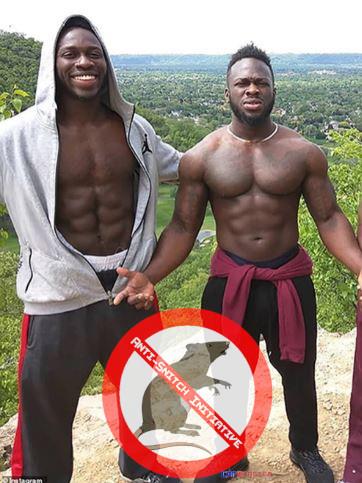 Abimbola and Olabinjo Osundairo are the snitches from the Jussie Smollett fake hate crime hoax case. The two brothers testified against Smollett at his trial earlier this month. They claimed that he offered them money to help stage a fake hate crime. As the star witnesses in the case it is well known that Smollett probably would not have been convicted without them. Police didn't contact the brothers until they were coming back to Chicago from Nigeria three weeks after the "attack" (see case timeline https://ift.tt/3yfvo3s). At that time they were merely "persons of interest" because they were the only two people that police could find in surveillance footage from areas near the "attack" but none of it actually showed the "attack" which of course never happened. They were arrested on suspicion of assault, held for 48 hours, and let go without charges after talking to the police. Whatever they said was enough for investigators to say that they "shifted" their investigation because of it. As Chicago Police Department spokesman Anthony Guglielmi said, "We can confirm that the information received from the individuals questioned by police earlier in the Empire case has in fact shifted the trajectory of the investigation." Smollett was arrested just 5 days after the brothers were released. He was charged with one count of disorderly conduct for filing a false police report. The charge was dropped a couple months later when Smollett agreed to perform community service and forfeit his bond. Then thousands of documents were released due to a records request, a special prosecutor was appointed to review the case, and the charges were re-instated. The brothers later testified against Smollett at his trial. That testimony made the state's case and led to his conviction. According to public records, Abimbola J. Osundairo and Olabinjo J. Osundairo are 28 and 30 year old residents of Chicago, Illinois. Abimbola's last known home address is 6604 S Saint Louis Ave. and Olabinjo's last known address is 4138 N Ashland Ave Apt. D. We are making that information publicly available so that the community can know that there are snitches in those areas. People need to know not to trust these people. Please do not use any of this information for any unlawful purpose. Olabinjo J. Osundairo was convicted of Aggravated Battery in 2011. They do not appear to be registered to vote. #jussiesmollett #abimbolaosundairo #olabinjoosundairo
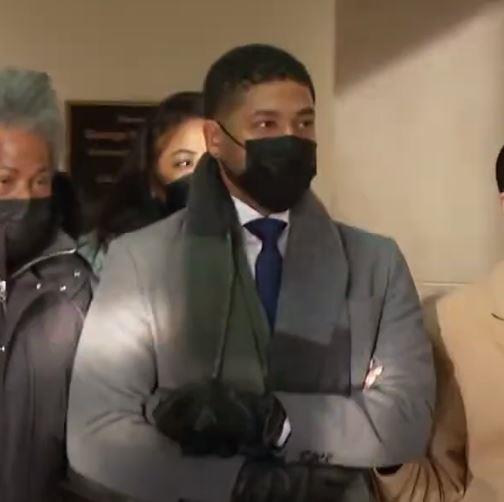 Sentencing former "Empire" actor Jussie Smollett to prison for staging a fake hate crime and lying about it would be a miscarriage of justice. Smollett is a famous actor whose career will likely never recover, his criminal history is minor, and the offense of conviction is non-violent. Those factors favor a sentence of probation with fines and/or community service. Our position is consistent with the sentencing factors outlined by Congress in the federal system which include "the nature and circumstances of the offense and the history and characteristics of the defendant ... to reflect the seriousness of the offense, to promote respect for the law, and to provide just punishment for the offense ... to afford adequate deterrence to criminal conduct ... to protect the public from further crimes of the defendant ... to provide the defendant with needed educational or vocational training, medical care, or other correctional treatment in the most effective manner." (see 18 U.S.C. 3553 https://ift.tt/1PpgsSS). Note that although this case is before an Illinois court and not a federal court that the law we just cited does not apply, but we are still using it because we are more familiar with the federal system and we know that the factors outlined by Congress are basically the same as the factors used by local judges across the country. Nature and Circumstances of the Offense The nature and circumstances of the offense do not favor prison time because the offense was non-violent, not a sex crime, and did not result in significant monetary losses for anyone other than Smollett. History and Characteristics of the Defendant The only prior conviction we are aware of Smollett having on his records was a misdemeanor for giving false information to law enforcement in 2007 (https://ift.tt/2BL6OLH). People with a single prior misdemeanor from over 10 years ago typically fall at the bottom of the criminal history scales used in sentencing guidelines across the country. In such cases the guidelines typically favor probation unless the nature and circumstances of the offense are heinous enough to justify sending a first time felon to prison. Smollett himself is a famous actor whose reputation has been ruined as a result of this case. There is a good chance he won't be able to find work in Hollywood at all after this. Any work he does find will not be anything like his prior work. He might be able to land a role as a zombie on The Walking Dead, but only because the makeup will keep viewers from recognizing him. Even then would likely have to exploit personal connections to overcome the fear any company would have of him being seen on their property. This factor favors probation because he has already suffered far more financially than most similarly situated defendants. Reflect Seriousness of Offense Nobody deserves to go to prison for making up stupid stories. Had he gotten away with it what would have been the harm? Two guys would have been paid for helping him stage the attack and nobody would have been hurt. It would have been for the most part a victimless crime with the only real victim being the truth. Such acts are not serious enough to justify sending anyone to prison. Afford Adequate Deterrence and Protect the Public from Further Crimes Smollett likely learned his lesson the second people started realizing what really happened. Just being known for doing something like this should be enough to deter Smollett and any similarly situated celebrity from trying to do something like this in the future. The conviction is surely enough to deter Smollett from doing it ever again. The only possible argument for sending Smollett to prison under this section would be that he needs to be made an example of because of the high profile nature of the case. That argument is not valid because it would be largely based on who the defendant is and not what he did. Provide the Defendant with needed Educational or Vocational Training Smollett is a rich and famous actor with the means to send himself to college. The system has nothing to offer Smollett in this area. Conclusion Jussie Smollett did a stupid thing, but society would not benefit from paying to incarcerate him. He is not a danger to society, he has suffered enough to deter anyone in his shoes from doing anything like this ever again, and he is not in need of any services from the system. #jussiesmollett #liars #blacklivesmatter
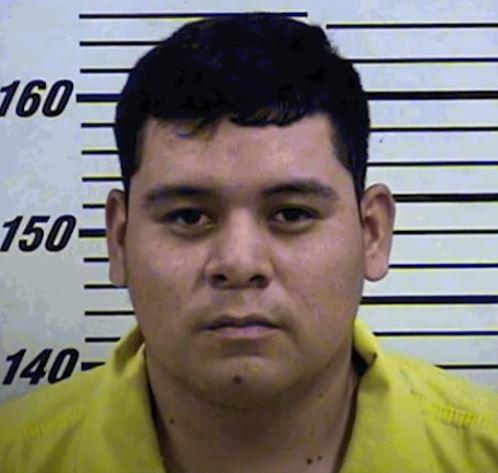 Isleta Police Officer Leon Martin was arrested this past week for raping a woman he had just arrested for DUI while taking her to jail in his patrol car. The crime took place on November 22nd and was reported at the hospital, but it still took another week for the IPD to arrest Martin. Martin admitted to having sex with the woman, but denies raping her. A couple days later she tested positive for Chlamydia. The victim says that she had sex with Martin because she was afraid that he would add extra charges or shoot her if she resisted. That power dynamic is why nobody in police custody can legally consent to having sex with an officer. Even if the victim in this case genuinely liked Officer Martin and asked for it, it is still rape because no detainee can legally consent to sex with an officer no matter how much they want it. We don't mean to imply that she wanted it at all, we are just trying to emphasize the fact that nobody in Officer Martin's position can defend an allegation of raping a detainee by claiming the sex was consensual. The description of events sure doesn't sound consensual. It sounds like he asked her to come to the driver's seat, took off his belt, and offered to talk to the judge for the purpose of seeking a charge reduction if she had sex with him. She said that she went along with it because she felt she had no other choice. Officer Martin claims that she initiated the encounter and that he had a lapse in judgment. Even if this were merely a lapse in judgment the power dynamic means that the victim could not legally give consent to Martin, so by admitting to having sex with the victim Officer Martin admitted to raping her. Martin is no longer employed by the IPD. #leonmartin #rape #sexoffenders #drunkdriving
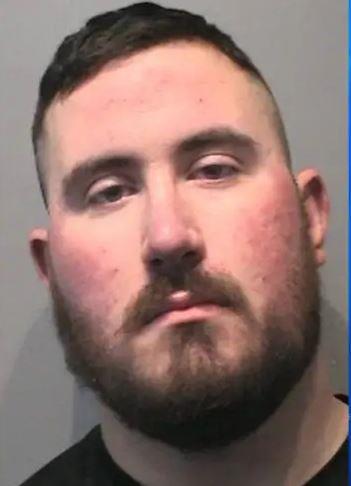 Johnson County Sheriff's Deputy Zachariah Johnson was arrested this past week for having a sexual relationship with a female inmate at the Johnson County Jail where he worked as a correctional officer. He now faces three counts of sexual misconduct, three counts of official misconduct and one count of trafficking with an inmate. Fun time was over when the inmate's lawyer reported the relationship to authorities. The Morgan County Sheriff's Office is investigating the case in an attempt to make the investigation look non-biased by brining in an outside agency. The exact details of the relationship does not appear to have been released. We are curious to learn exactly how Johnson had sex with a female inmate three times with nobody noticing. We also suspect that there could be more victims because by the time guys like Johnson get caught they've been doing it awhile. According to public records, Zachariah Braden Johnson is a 28 year old resident of Hope, Indiana. However, news reports say that he lives in North Vernon. We reviewed the results of our background check and it appears that he was only recently associated with an address in North Vernon, so we think that is where he lives. #zachariahjohnson #johnsoncountyjail #sexualmisconduct